
A portrait with a story
An armoured character holds a turnip-crown portrait while companions and an older festival-goer react warmly. Give the capable character a private history with a playful edge.
Player & progression
One private history.
A wonderfully awkward detail.
A choice about sharing it.

A little history. A warmer character.
Prepare an awkward detail that enriches an established character without dictating a reveal.
An armoured character holds a turnip-crown portrait while companions and an older festival-goer react warmly. Give the capable character a private history with a playful edge.
Keep the origin, possible exposures and recognisers beside roleplaying cues, hooks and a resolution. Leave whether and when to share the story with the player.

Hobbies, costumes and keepsakes
A lute, ribbon-tied letters, a puppet and a turnip-crown portrait sit among costumes as a group shares warm reactions.
Choose the kind of private history and its level of embarrassment. Keep the tone playful or tender and grounded in known facts.
What you can prepare
Give an established character a private story with useful details for play.
Enter the character’s name, role and known facts. Keep the secret connected to the history you already share.
Set a mildly awkward, blush-worthy, properly embarrassing, mortifying, reputation-shaking or legendary private story.
Use a silly fear, former job, secret hobby, memorable failure, hidden crush, faked skill, colourful relative or ridiculous old belief.
Choose childhood, hard times, an admired person, a loss, an old success or an accident as the starting point.
Keep two ways the story could surface. An opportunity to recognise a clue leaves the choice of disclosure with the player.
Prepare how the secret appears in play and who might recognise it. Give a private history a few gentle roleplaying cues.
Retain two story hooks and two roleplaying tips beside a possible resolution. Use the detail to enrich the character.
Supply an established fact to build on, things to avoid and private Dungeon Master context. Keep the result playful or tender.
Lock favourite sections, change or edit others and save versions. Reopen earlier secrets with their useful details together.
Copy, export JSON or print a Dungeon Master dossier or player-facing character note. Review the selected view before sharing.

Origins and possible exposures
Portraits, festival pictures and miniatures share the table with turnips, thread, notes and a Dungeon Master screen.
Begin with name, role and known history. Choose tone and level, then review the origin, two possible exposures and people who may recognise it.
Quick setup. Deeper preparation.
Build on established facts and boundaries, then refine the material you want to keep.
Enter their name, true details and role. Set the tone and the level of embarrassment that fits their story.
Pick a hidden detail and where it began, from childhood or hard times to an old success or accident.
Supply a known fact to build on, things to avoid and private context. Keep the secret respectful of the character and table.
Lock favourite sections, change or edit others and save versions. Return to earlier material as the campaign develops.

A festival portrait and familiar faces
An armoured character reacts beside a turnip-crown portrait as an older man, companions and children share the festival scene.
Use possible exposures as story opportunities. Keep two hooks, two roleplaying tips and a resolution ready; the player chooses how the secret comes out.
Saved secrets and table references
Choose and review the material you share with your group.
Save and reopen secrets with the origin, exposure points, table cues, people involved, hooks, tips and resolution together.
Lock useful sections and change or edit others. Save versions so you can return to an earlier shape of the character’s story.
Choose a full Dungeon Master dossier or a player-facing character note. The note omits Dungeon Master notes and private context; review the selected material.
Copy the chosen view, export JSON or print a reference. Keep the decision about revealing the secret with the player.
Your desktop and related products
Open products through your account and bring the selected material to the table.

Open your VISINVOKE products through one signed-in Windows desktop workspace.
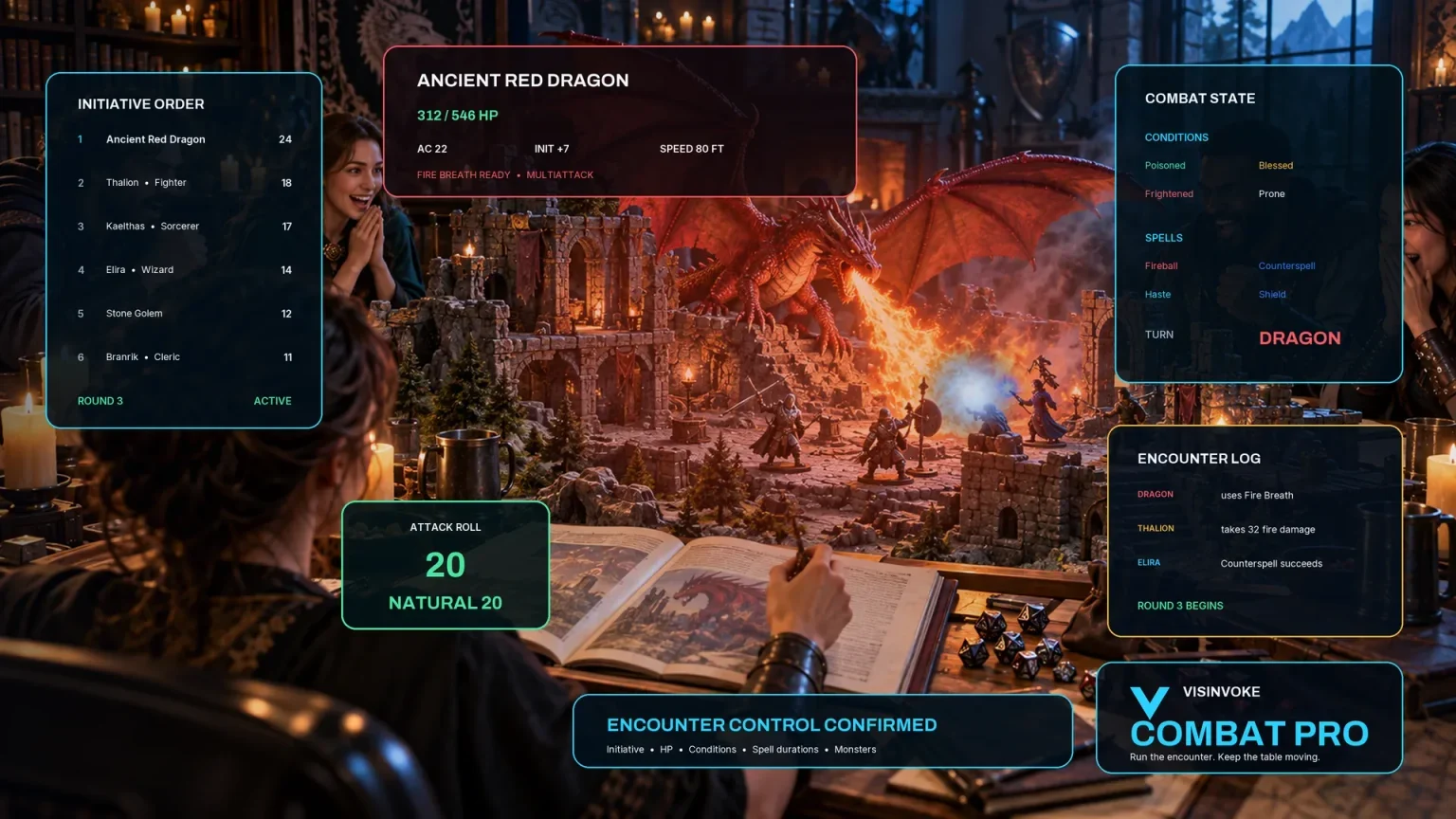
Use the dedicated encounter workspace for combat and keep character stories with your campaign references.
Artwork illustrates fictional character stories and related products, not application screens.
Questions and answers
Private histories, possible exposures, saved secrets and audience views at a glance.
One private awkward piece of an established character’s past. It gives the secret an origin, possible exposures, table cues, recognisers, story hooks, tips and a possible resolution.
Enter the character’s name, role and true details. Choose tone and how embarrassing the story feels to them. Add a kind of secret, an origin and deeper context when you want more direction.
A silly fear, former job, secret hobby, memorable failure, hidden crush, faked skill, colourful relative or ridiculous old belief. Choose a level from mildly awkward to legendary while keeping the story respectful.
The player chooses whether, when and how to disclose it. The generator prepares possible exposures and story opportunities; it does not make a reveal compulsory.
Save and reopen secrets and versions, lock useful sections and change or edit others. Copy, export JSON or print a selected view. The player-facing character note omits the Dungeon Master’s note and private context; review your selected material before sharing.
Open the Generators collection in Desktop Control Centre on Windows through your VISINVOKE account. Review individual subscription access and current pricing in your account. Creating a free account is separate from paid generator access.
Continue in VISINVOKE
Create a free VISINVOKE account or sign in to your existing account. Get Desktop Control Centre through your account installer page.
Open the Generators collection on Windows. Review current subscription and access details in your account.